WORKSHOP SCHOOL

Overview

In this workshop, students modeled bacterial evolution by physically tracking and modifying paper representations of bacterial populations.

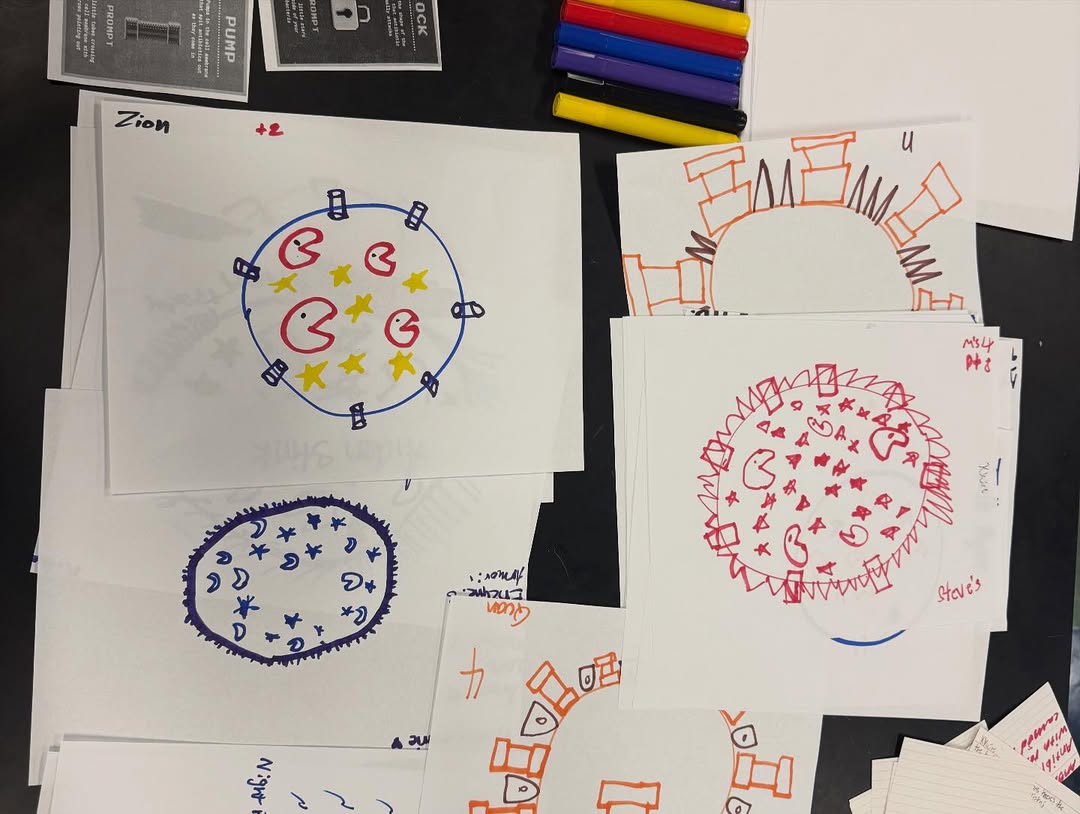
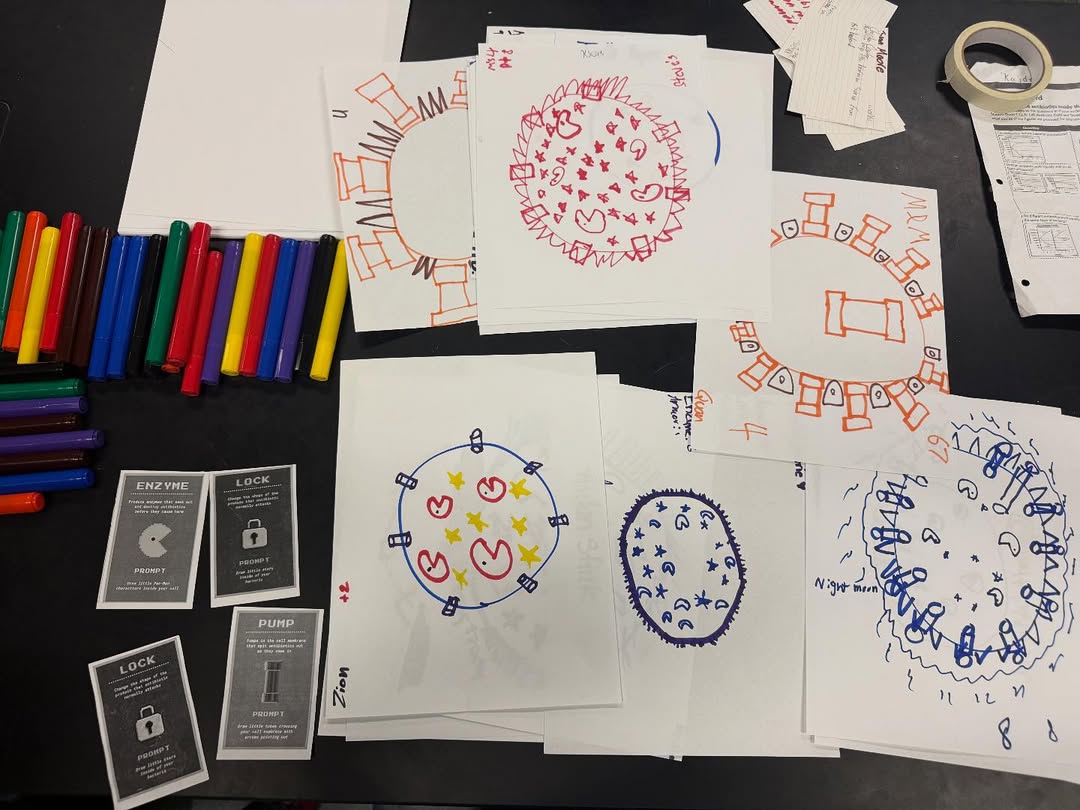
Each student drew initial bacteria on a "petri dish," rolled dice to simulate random mutations, and added resistance traits using visual prompts like shields, pumps, or stars. They then simulated antibiotic attacks, applied horizontal gene transfer by exchanging traits with classmates, and doubled their populations to represent bacterial growth. These steps made concepts such as mutation, selection pressure, gene transfer, and population expansion tangible through interactive drawing and gameplay.

Objectives

  • Describe how bacterial populations evolve in response to antibiotics.

  • Explain how mutations and resistance traits affect bacterial survival.

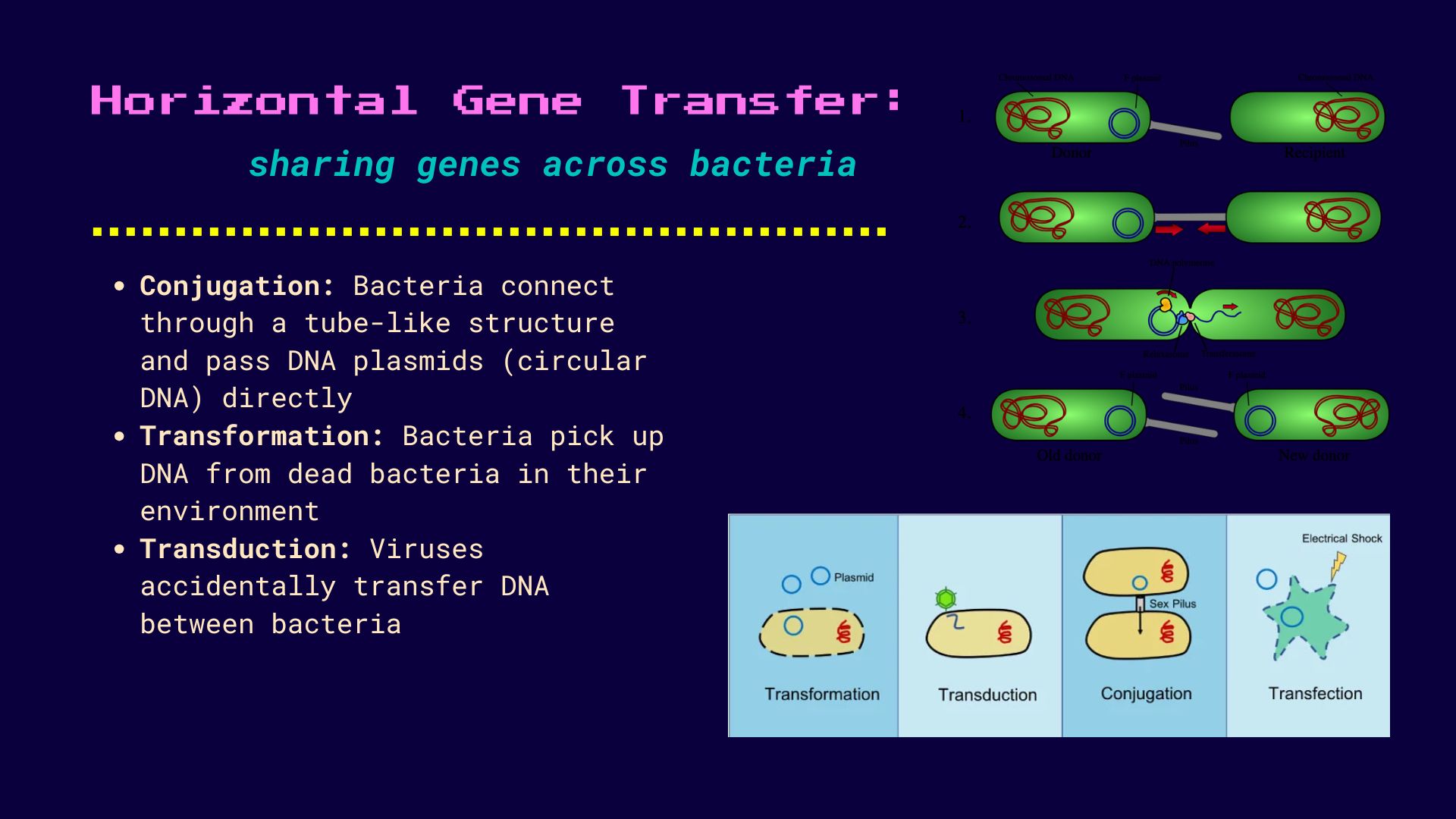
  • Understand the roles of horizontal and vertical gene transfer in spreading resistance.

  • Apply the concepts of selection pressure and population growth to predict bacterial outcomes.

Materials

  • Paper for “petri dishes” (one per student)

  • Writing utensils: pens, pencils, markers

  • Dice (one per student or pair)

  • Trait cards:

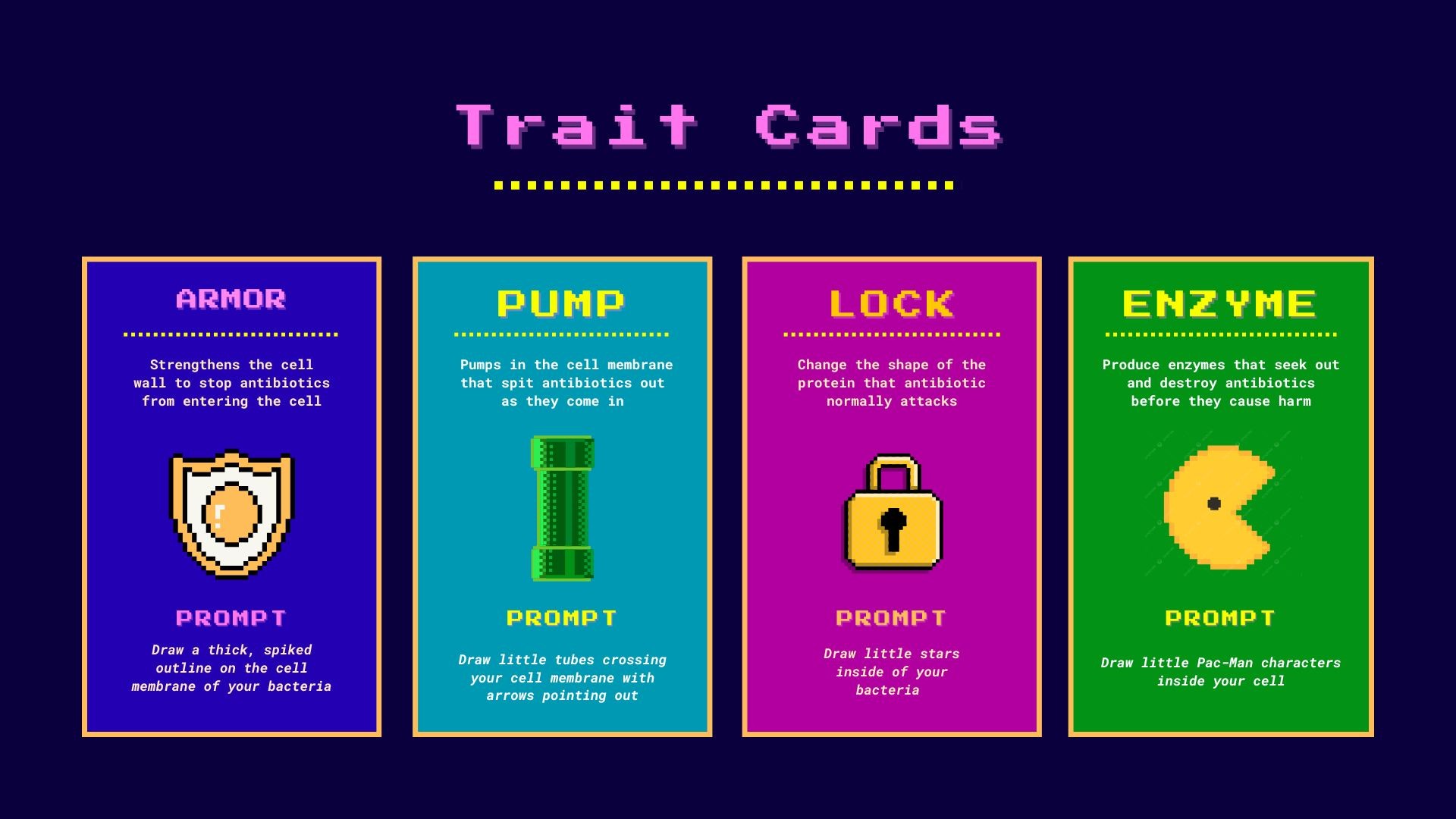
    • Thick Cell Wall (shield)

    • Efflux Pump (arrows)

    • Altered Target Site (star)

  • Scissors (optional, for cutting trait cards)

  • Tape or glue (optional, for attaching traits or drawings)

  • Large poster or board for class population tracking

  • Reference sheets or instructions for mutations, antibiotic attacks, and gene transfer

  • Visual prompts/examples for drawing resistance traits

Workshop Outline

Please use this link to view the full outline for this workshop. A sample of the outline is provided below.

What is bacteria?

  • Content

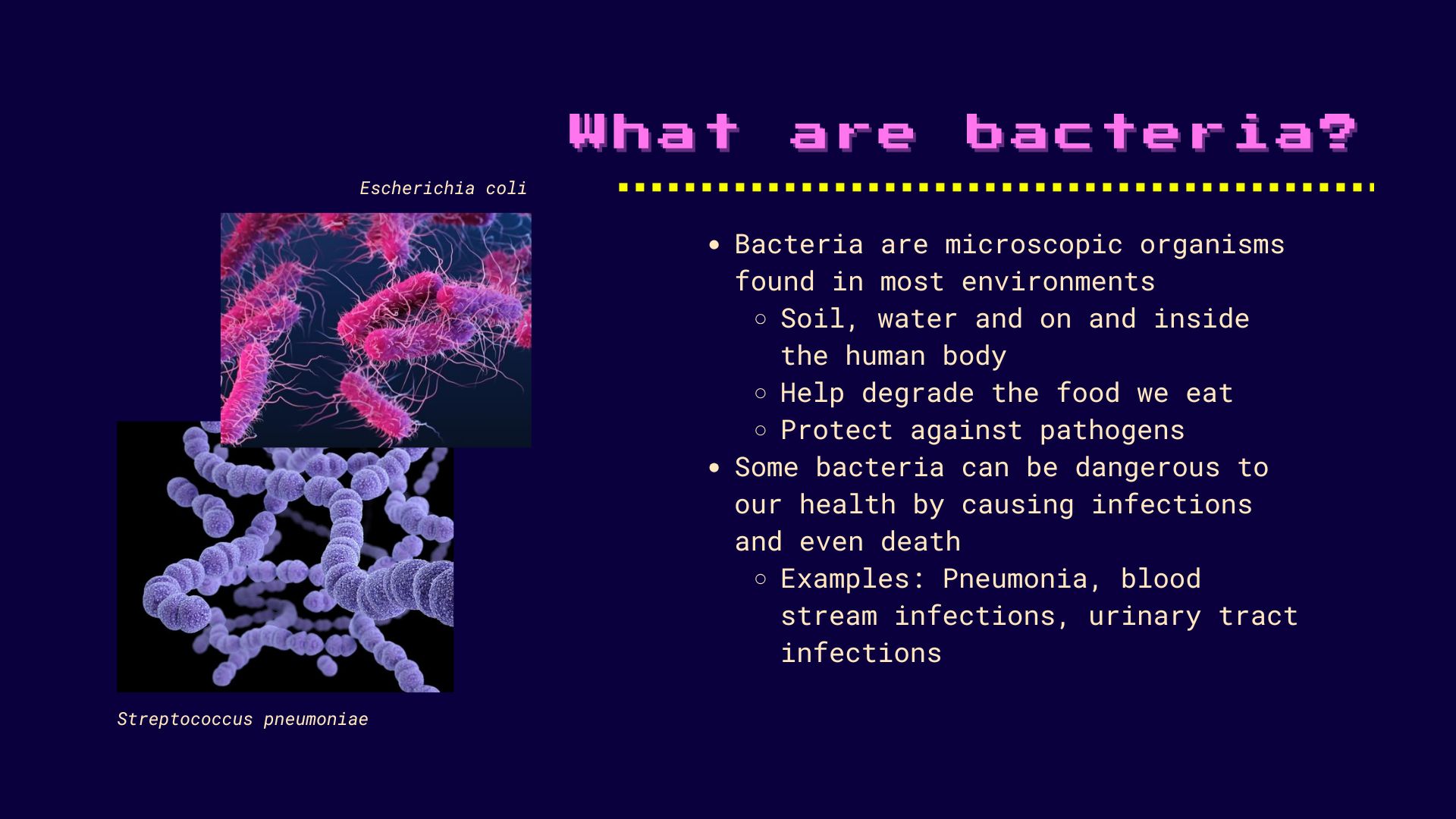
    • Bacteria are small (microscopic size) organisms that can be found in most environments, for example in soil, water and on and inside the human body 

    •  We would not survive without them! 

      • Help degrade the food we eat  

      • Protect against pathogens 

    • Disease-causing bacteria

      • Some bacteria can be dangerous to our health by causing infections and even death 

      • We can get them from outside the body: other humans, animals, food, water

      • Sometimes our “own” bacteria can cause disease

        • Examples of bacterial infections: Pneumonia,  Blood stream infections,  Urinary tract infections 

  • Activity 

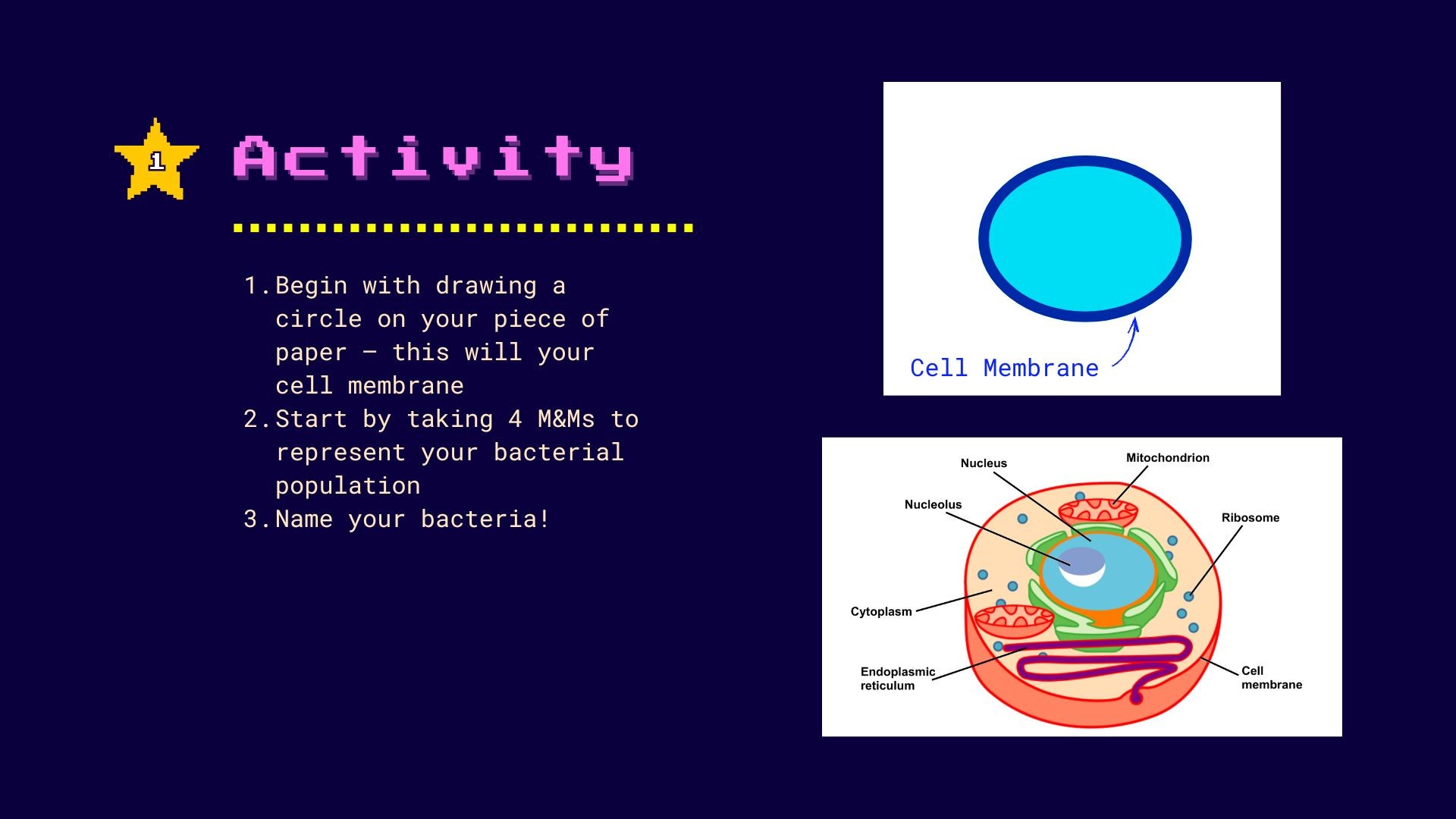
    • Begin with a piece of paper representing petri dish

    • Start by drawing 4 bacteria to represent bacterial population

    • Can create a name in “Genus, species” format 

    • Everybody records/draw their initial bacteria and population number

  1. Mutations: the basis of evolution 

  • Content

    • Mutations = randomly occurring changes in the DNA (changes in base pairs A,T,C,G) that can result in different phenotypes (physical traits)

  • Activity 

    • Roll die

      • 1-3: no mutation (bacteria stay the same), draw nothing

      • 4-5: bacteria gain mild resistance, draw one defense on bacteria 

      • 5-6: full resistance, draw two new defenses on bacteria 

    • Choose from these trait cards to add to bacteria

      • Shield (good against Penicillin)

      • Pump (good against everything)

      • Star (good against Carbapenem)

Workshop Outline

Please use this link to view the full outline for this workshop. A sample of the outline is provided below.

What is bacteria?

  • Content

    • Bacteria are small (microscopic size) organisms that can be found in most environments, for example in soil, water and on and inside the human body 

    •  We would not survive without them! 

      • Help degrade the food we eat  

      • Protect against pathogens 

    • Disease-causing bacteria

      • Some bacteria can be dangerous to our health by causing infections and even death 

      • We can get them from outside the body: other humans, animals, food, water

      • Sometimes our “own” bacteria can cause disease

        • Examples of bacterial infections: Pneumonia,  Blood stream infections,  Urinary tract infections 

  • Activity 

    • Begin with a piece of paper representing petri dish

    • Start by drawing 4 bacteria to represent bacterial population

    • Can create a name in “Genus, species” format 

    • Everybody records/draw their initial bacteria and population number

  1. Mutations: the basis of evolution 

  • Content

    • Mutations = randomly occurring changes in the DNA (changes in base pairs A,T,C,G) that can result in different phenotypes (physical traits)

  • Activity 

    • Roll die

      • 1-3: no mutation (bacteria stay the same), draw nothing

      • 4-5: bacteria gain mild resistance, draw one defense on bacteria 

      • 5-6: full resistance, draw two new defenses on bacteria 

    • Choose from these trait cards to add to bacteria

      • Shield (good against Penicillin)

      • Pump (good against everything)

      • Star (good against Carbapenem)

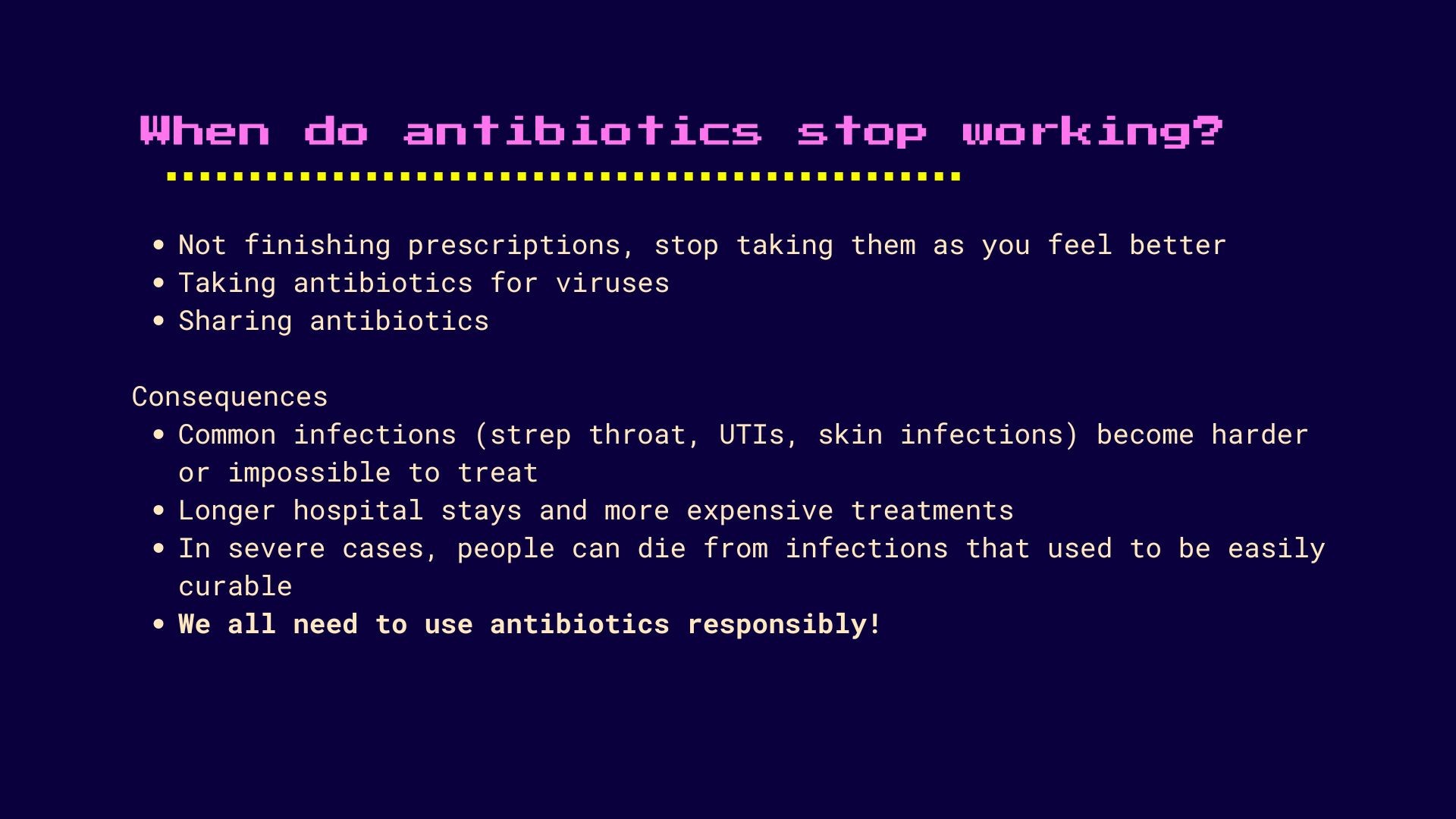
Presentation

Please use this link to view the full slides presentation for this workshop. A sample of the presentation is provided below.
BIOART LAB © 2025

Create a free website with Framer, the website builder loved by startups, designers and agencies.